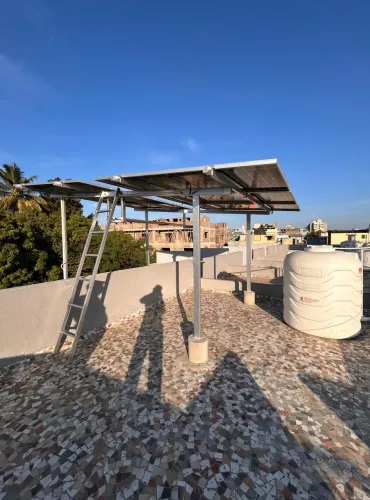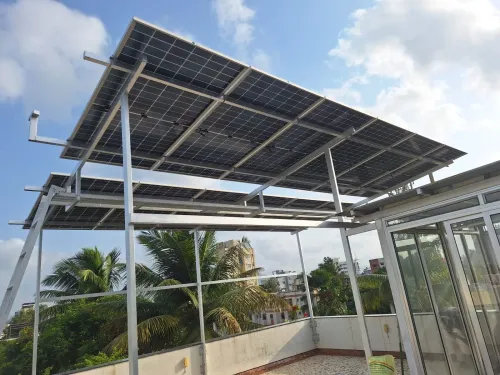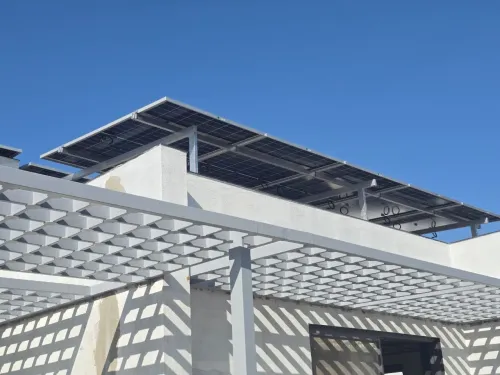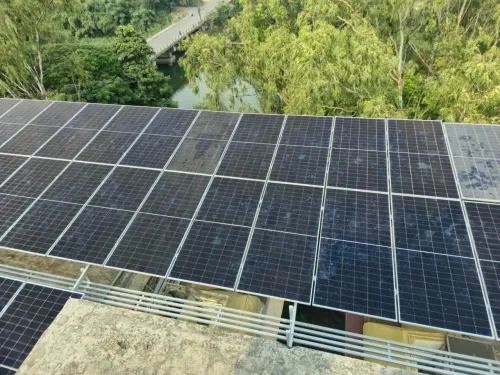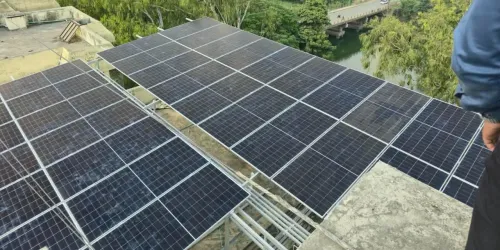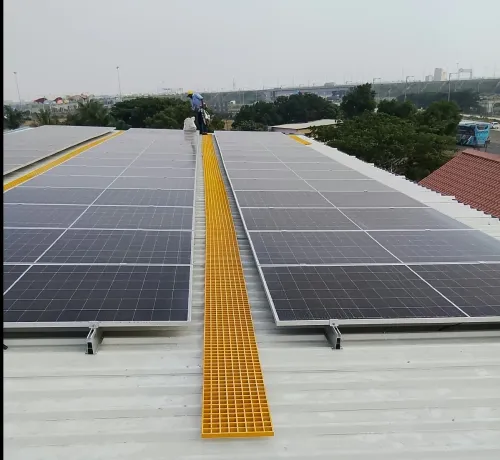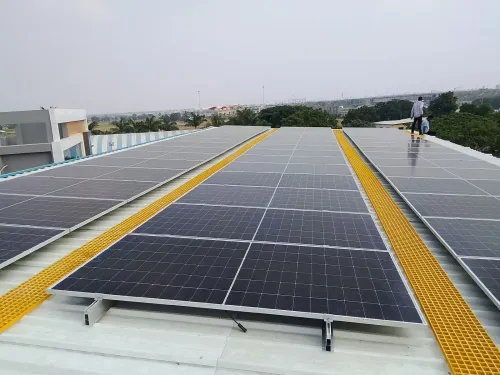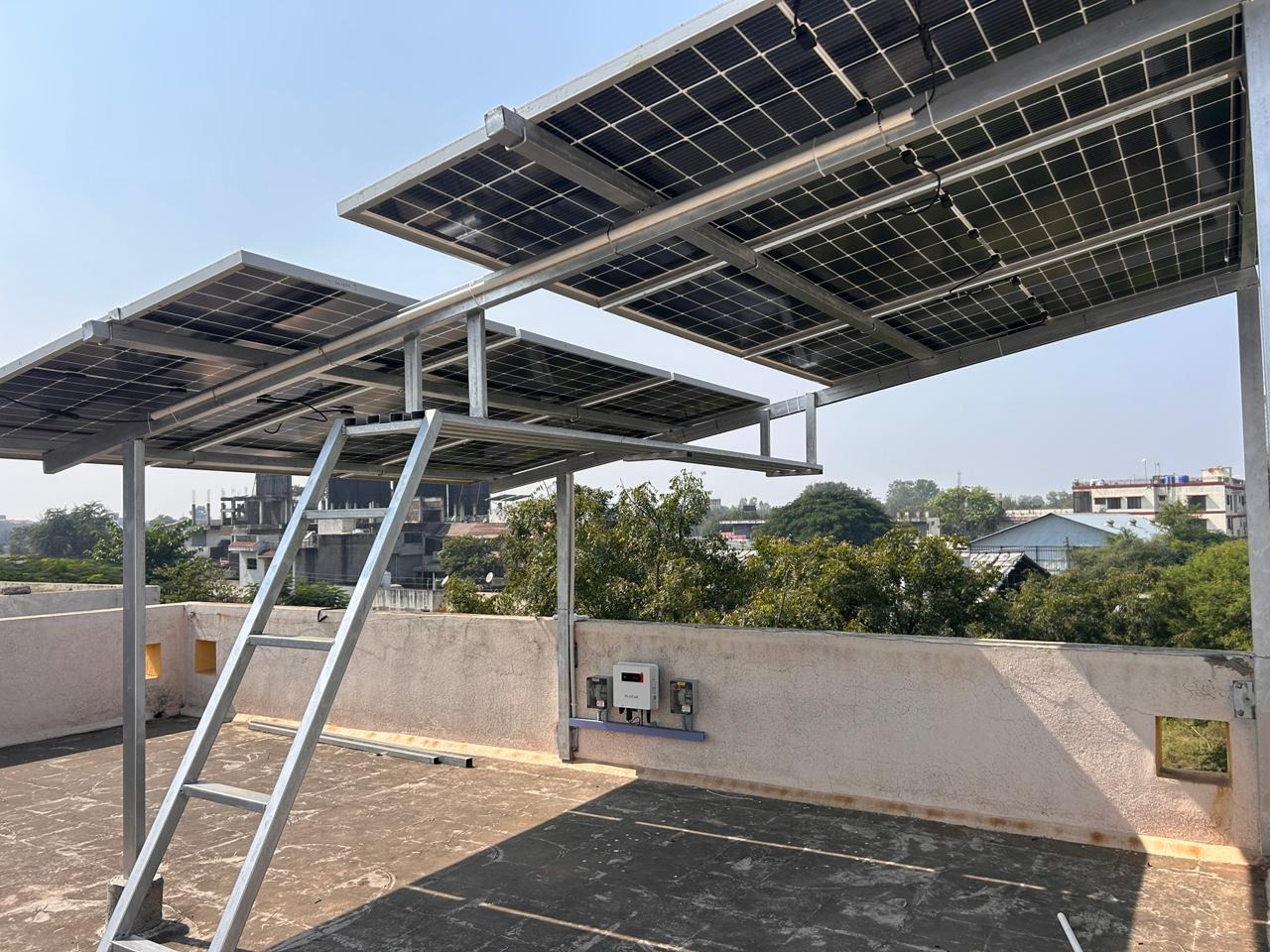
A Net Metering Solar System in Nashik is an efficient way for residential, commercial, and industrial property owners to generate their own electricity through solar panels while reducing dependence on grid power. With a properly designed rooftop solar system, excess electricity generated during the day can be exported to the electricity grid, helping eligible consumers optimize their energy consumption and electricity costs.
Nashik receives substantial sunlight throughout the year, making rooftop solar a practical option for homes, offices, shops, factories, educational institutions, and other properties. A solar system with net metering can help property owners make better use of their available rooftop space while contributing to cleaner energy generation.
How Does Net Metering Work?
A net metering solar system connects your rooftop solar installation with the electricity grid through an appropriate bi-directional meter.
The basic process is:
- Solar panels generate electricity from sunlight during the day.
- The property uses the generated solar power for its appliances, equipment, lighting, and other electrical loads.
- Excess electricity is exported to the grid when solar generation exceeds on-site consumption.
- Electricity is imported from the grid when solar generation is insufficient, such as at night or during periods of low sunlight.
- The bi-directional meter records electricity imported from and exported to the grid, subject to the applicable regulations and utility arrangements.
Benefits of Net Metering Solar System in Nashik
1. Reduce Electricity Expenses
Generating electricity from rooftop solar can reduce the amount of electricity that needs to be purchased from the grid, depending on system size, consumption, tariff, and solar generation.
2. Utilize Your Rooftop Space
Residential and commercial rooftops can be converted into productive solar-generation areas without requiring additional land.
3. Export Excess Solar Power
When your solar system produces more electricity than your property is consuming, surplus generation can be exported to the grid under the applicable net-metering framework.
4. Renewable Energy Generation
Solar power helps generate electricity from a renewable source and can reduce reliance on conventional grid electricity.
5. Suitable for Different Property Types
Net-metered rooftop solar systems can be considered for homes, apartments where applicable, offices, commercial establishments, schools, hospitals, and industrial facilities, subject to applicable technical and regulatory requirements.
Why Choose Solar Net Metering in Nashik?
For property owners searching for solar net metering in Nashik, system design should be based on actual electricity consumption, available rooftop area, roof orientation, shading conditions, sanctioned load, and applicable electricity-distribution regulations.
A professional solar installer can evaluate your electricity bills and site conditions to determine an appropriate system capacity. The installation should also comply with the requirements of the relevant electricity distribution utility and current Maharashtra regulations.
Is Net Metering Solar Suitable for Your Property?
A net-metering solar system may be worth evaluating if your property has:
- A suitable rooftop or installation area
- Adequate sunlight exposure
- Regular electricity consumption
- Sufficient electrical infrastructure for the proposed system
- Eligibility under the applicable electricity-distribution regulations
- A requirement to reduce dependence on conventional grid electricity
For accurate sizing, consider your monthly electricity consumption, daytime electricity usage, sanctioned load, rooftop area, and recent electricity bills rather than selecting a system solely based on roof size.
FAQs – Net Metering Solar System in Nashik
1. What is a net metering solar system?
It is a grid-connected solar system where electricity generated by rooftop solar can be consumed on-site, while eligible surplus electricity can be exported to the electricity grid through a suitable metering arrangement.
2. Is net metering available in Nashik?
Net-metering availability and eligibility depend on the applicable Maharashtra regulations, distribution utility requirements, connection type, sanctioned load, and other technical conditions. These should be verified before installation.
3. Can residential properties use solar net metering in Nashik?
Eligible residential consumers can explore grid-connected rooftop solar with the applicable metering arrangement, subject to prevailing rules and utility approval.
4. How much rooftop space is required for solar?
The required area depends on the selected panel technology, system capacity, roof layout, shading, orientation, and installation design. A site survey provides a more accurate assessment.
5. Does net metering eliminate the electricity bill completely?
Not necessarily. The outcome depends on solar generation, electricity consumption, tariff structure, fixed or other applicable charges, system capacity, and the prevailing billing and metering regulations.
6. How do I select the right solar system capacity?
Solar capacity should ideally be determined using your historical electricity consumption, daytime load, available roof area, sanctioned load, and applicable utility requirements.
7. Can commercial and industrial properties install net-metered solar systems?
Depending on the applicable regulations and connection category, commercial and industrial consumers may be able to install grid-connected rooftop solar. Eligibility and metering arrangements should be confirmed with the relevant utility.
Choose a Professional Solar Installer in Nashik
Installing a Net Metering Solar System in Nashik requires more than simply installing solar panels. Proper system sizing, structural assessment, inverter selection, electrical design, protection systems, documentation, installation, commissioning, and coordination for the applicable metering process are important for a reliable rooftop solar setup.
If you are planning rooftop solar with net metering in Nashik, consult a qualified solar professional to assess your electricity consumption and property before selecting the system capacity.
Keywords